
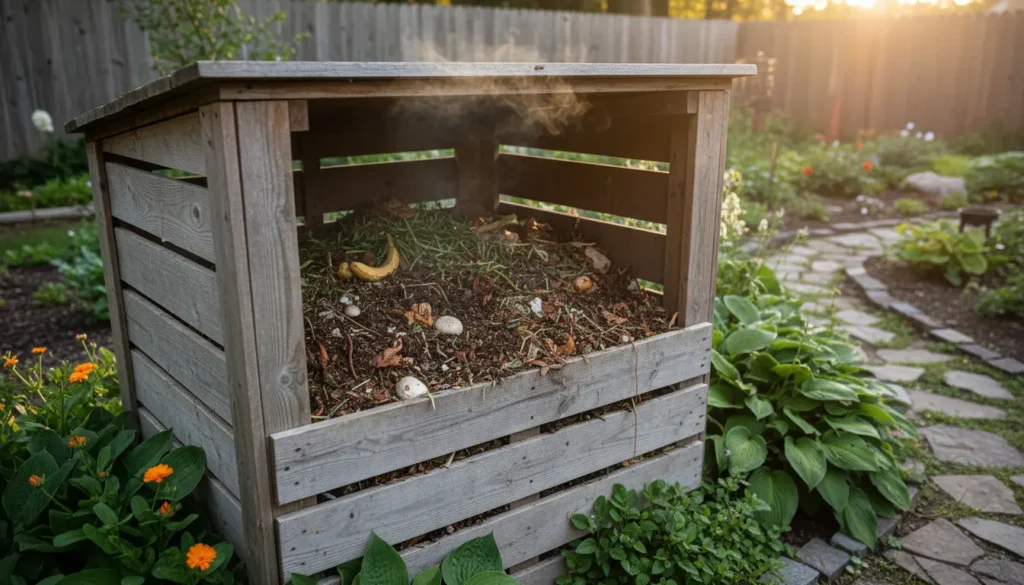
Start Home Composting with Simple Steps
Home composting turns kitchen scraps and yard waste into useful soil. This guide gives clear, practical steps so beginners can start composting at home today.
Why Home Composting Matters
Composting reduces landfill waste and returns nutrients to your garden. It also lowers methane emissions from organic waste sent to dumps.

For households, composting can cut trash volume by up to 30 percent and improve soil structure in pots or beds.
How to Start Home Composting
Starting is straightforward: pick a location, choose a container, collect materials, and manage moisture and aeration. You do not need special equipment to begin.
Follow these basic steps to set up your first compost pile or bin.
1. Choose a Compost Bin or Area
Select a bin that fits your space and budget. Options include tumblers, plastic bins, wire cages, or a simple heap in a corner of the yard.
- Small balconies: compact bokashi or worm bin (vermicompost).
- Backyards: stationary bin or tumblers for faster mixing.
- Garden beds: open heap worked into soil over time.
2. What to Compost
Mix carbon-rich brown materials and nitrogen-rich green materials. Balance keeps the pile active without bad odors.
- Greens (nitrogen): fruit and vegetable scraps, coffee grounds, fresh grass clippings.
- Browns (carbon): dry leaves, shredded paper, cardboard, small wood chips.
- Avoid: meat, dairy, oily foods, diseased plants, and pet waste for typical backyard compost.
3. Layer and Maintain
Start with a layer of coarse browns to help drainage. Alternate greens and browns in 2–4 inch layers. Keep the pile moist like a wrung-out sponge.

Turn or aerate the pile every 1–2 weeks to add oxygen and speed decomposition. Use a pitchfork or a tumbler for easy mixing.
Common Problems and Fixes in Home Composting
Problems are usually easy to fix by adjusting balance, moisture, or aeration. Below are typical issues and quick remedies.
- Smelly compost: Too wet or too much green material. Add dry browns and turn the pile.
- Pile too dry: Add water and more greens; cover with a tarp in hot, dry weather.
- Slow breakdown: Chop materials smaller, add nitrogen source, and increase turning frequency.
Maintenance Tips for Home Composting
Consistent, small efforts keep compost healthy. Set a weekly routine for adding scraps and a monthly check for turning.
- Collect kitchen scraps in a sealed container and empty daily.
- Keep a supply of shredded cardboard or dry leaves to balance greens.
- Use finished compost as soil amendment in pots, garden beds, or lawn top dressing.
Compost can reach internal temperatures of 130 to 160°F (55 to 70°C) in hot piles. High temperatures kill seeds and pathogens but require larger, well-balanced piles.
Small Case Study: A Two-Person Household
Maria and Tom live in a small house with a backyard bin. They started composting kitchen scraps and yard trimmings in spring.
Within six months they produced enough compost to refresh two raised beds. Their weekly trash volume dropped by about 25 percent.
Key changes they made: chopping scraps, adding shredded cardboard, and turning the pile every two weeks.
Tips for Specific Situations
Apartment or Balcony Composting
Use vermicomposting or a bokashi system for limited space. Worm bins work well indoors and produce liquid fertilizer and castings.
Empty and use the finished compost in potted plants or share with community gardens.
Cold Climate Considerations
Composting slows in winter but continues. Insulate the bin with straw or move a tumbler into a sheltered spot.
Collect scraps in a freezer-safe container if you need to reduce smells before adding to the pile.
Using Finished Compost
Finished compost is dark, crumbly, and has an earthy smell. Use it to improve soil structure, water retention, and nutrient content.
Apply as a top layer in beds, mix into potting soil, or use as lawn topdressing. Typical application rates are 1–2 inches on beds, worked in lightly.
Quick Checklist to Start Home Composting
- Choose a bin or space suited to your home.
- Collect greens and browns separately at first.
- Maintain moisture and aerate regularly.
- Troubleshoot odors, pests, and slow breakdown quickly.
- Use finished compost to nourish plants and reduce store-bought fertilizer needs.
Home composting is a low-cost, effective step toward sustainable living. With simple routines and attention to balance, almost anyone can turn waste into a valuable resource.