
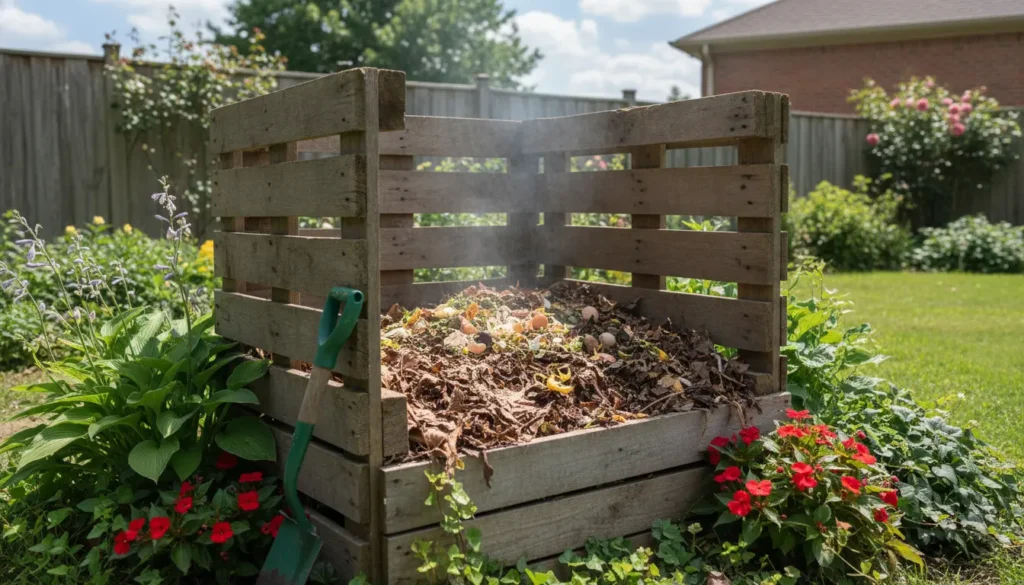
Composting at home turns kitchen and yard waste into a useful soil amendment. This guide gives clear, practical steps for home composting for beginners. Follow the steps and avoid common mistakes to get finished compost in months, not years.
Why choose home composting for beginners
Home composting reduces household waste and improves soil health. It also saves money on fertilizer and reduces methane from landfills.
Beginners often worry it will be smelly or difficult. With the right setup and simple routines, most problems are easy to avoid.
Benefits of home composting for beginners
- Reduces trash and disposal costs
- Produces nutrient-rich soil conditioner
- Improves water retention in soil
- Supports a circular home garden system
Types of setups for home composting for beginners
Choose a system that fits your space and schedule. Each method has different time and maintenance needs.
- Bin composting: Enclosed container in a yard or balcony. Good for small spaces.
- Pile composting: Simple heap on the ground. Works for larger yards.
- Worm composting (vermicomposting): Uses worms to speed breakdown in indoor bins.
- Tumbler composting: Sealed drum you rotate to aerate. Fast and tidy.
How to start home composting for beginners: step-by-step
Starting is mostly about balance and routine. Follow these steps to build an active compost system.
1. Pick a location and bin
Place the bin on bare soil or a stable surface near your kitchen for convenience. Ensure some drainage and air flow.
2. Gather materials: greens and browns
Balance nitrogen-rich “greens” and carbon-rich “browns.” Aim for roughly a 1:2 ratio by volume.
- Greens: vegetable scraps, coffee grounds, fresh grass clippings
- Browns: dry leaves, shredded paper, cardboard, straw
3. Build your pile
Start with a layer of coarse browns for drainage. Alternate 2–4 inch layers of greens and browns. Keep the pile moist, like a wrung-out sponge.
4. Aerate regularly

Turn the pile every 1–2 weeks with a pitchfork or use a tumbler. Aeration supplies oxygen to microbes and speeds decomposition.
5. Monitor temperature and moisture
A hot pile (110–160°F / 43–71°C) decomposes faster. If it cools, add greens and turn. If it is too wet or smells, add browns and increase airing.
Common mistakes in home composting for beginners and how to avoid them
Many early issues are easy fixes. Watch for these common pitfalls.
- Pile too wet: Add dry browns and turn. Avoid adding large amounts of kitchen liquid.
- Wrong materials: Do not add meat, dairy, diseased plants, or pet waste to a basic home pile.
- Not enough air: Turn more often or add bulking materials like small branches.
- Pile too small: Maintain at least a 3x3x3 foot mass for efficient heating unless using worms or a tumbler.
Using finished compost and timing for home composting for beginners
Finished compost is dark, crumbly, and smells earthy. Timing depends on method and care; it can take 2 months to 1 year.
Use finished compost to:
- Top-dress lawns and garden beds
- Mix into potting soil for houseplants
- Improve vegetable garden beds before planting
Composting can reduce household waste by up to 30 percent. Even small apartments can compost with a compact worm bin or a bokashi system.
Simple troubleshooting for home composting for beginners
If your pile smells, it is usually too wet or lacks air. Add dry browns and turn. If decomposition is slow, increase greens, chop materials small, and ensure moisture.
Small case study: Suburban family reduces waste
In one suburban household, a family of four started a tumbler bin in spring. They collected kitchen scraps and yard waste for six months. With weekly turns and a balance of greens and browns, they produced rich compost in about five months.
Result: their weekly trash volume fell by about 35 percent and their vegetable yields increased after integrating compost into beds.
Quick checklist for home composting for beginners
- Choose a bin suited to space and effort
- Collect greens and browns separately
- Keep pile moist and aerated
- Turn regularly and monitor odor
- Use finished compost in garden or pots
Home composting for beginners is straightforward with the right routine. Start small, observe the pile, and adjust materials and turning frequency. In a few months you will see waste decrease and soil quality improve.