
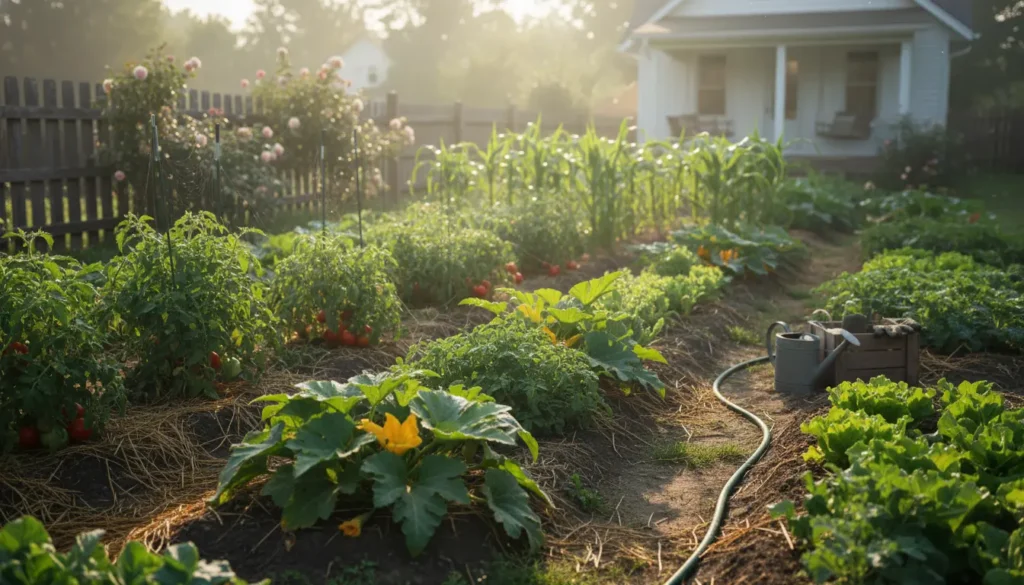
How to Start a Vegetable Garden: First Steps
Starting a vegetable garden is a practical way to grow fresh food and learn new skills. This guide breaks the process into clear steps you can follow this season.
Did You Know? Most vegetables need at least 6 hours of direct sunlight a day. Leafy greens tolerate less light than fruiting crops like tomatoes and peppers.
Plan Your Garden Before You Plant

Good planning saves time and reduces waste. Decide what to grow based on space, climate, and how much time you can commit.
Choose Vegetables That Match Your Needs
Start with easy, high-reward plants if you are a beginner. Examples include lettuce, radishes, bush beans, and cherry tomatoes.
- Lettuce and spinach: quick harvest, tolerant of partial shade
- Radishes: fast germination and maturity in about 3–4 weeks
- Bush beans: minimal staking and high yield
- Tomatoes: require more care but give abundant fruit
Choose a Site to Start a Vegetable Garden
Select a spot with good sun, accessible water, and well-draining soil. Avoid low spots that collect water or areas under large tree roots.
Prepare Soil and Beds
Healthy soil is the foundation of a productive garden. Focus on structure, fertility, and organic matter.
Test and Improve Soil
Do a simple soil test or use a kit to check pH and nutrient levels. Most vegetables prefer a pH of 6.0–7.0.
Amend soil with compost at a rate of about 2–3 inches spread over the planting area and lightly mixed into the top 6–8 inches.
Raised Beds or In-Ground?

Raised beds warm faster and drain better, making them ideal for short seasons or compact spaces. In-ground beds are cheaper but may need more amendment.
Planting and Spacing
Follow seed packet or plant tag spacing recommendations. Overcrowding reduces airflow and increases disease risk.
Direct Sow vs. Transplants
Direct sow fast-maturing crops like carrots and beans. Use transplants for tomatoes, peppers, and brassicas to get a head start on the season.
Succession Planting to Extend Harvest
Plant small batches every 2–3 weeks for crops like lettuce and radishes. This keeps harvests steady instead of all at once.
Watering and Feeding Your Garden
Consistent watering supports steady growth. Most vegetables need about 1 inch of water per week, more in hot weather.
- Water at the base of plants to keep foliage dry and reduce disease.
- Use mulch to retain moisture and suppress weeds.
- Feed with a balanced organic fertilizer or compost tea every 3–4 weeks during the growing season.
Pest and Disease Management
Integrated pest management keeps problems manageable without heavy chemical use. Start with prevention and monitoring.
Practical Pest Controls
Use row covers for seedlings, hand-pick larger pests, and encourage beneficial insects like ladybugs. Rotate crops each year to reduce disease pressure.
When to Use Organic Treatments
Apply organic sprays like neem or insecticidal soap only after confirming the pest and when thresholds are reached. Targeted use preserves beneficial insects.
Harvesting and Crop Rotation
Harvest regularly to encourage continued production. Pick tomatoes when they are fully colored for best flavor.
Rotate families (e.g., solanaceae, brassicas, legumes) to different beds each year to limit nutrient depletion and disease buildup.
Small Real-World Example: A 4×8 Raised Bed Case Study
Sarah converted a sunny corner of her yard into a 4×8 raised bed. She filled it with a 50/50 mix of topsoil and compost and planted:
- Two tomato plants and three pepper plants along the back
- A row of bush beans in the center
- Lettuce and radishes along the front for continuous harvest
With drip irrigation and a 2-inch mulch layer, she harvested salad greens within five weeks and had a steady supply of tomatoes by mid-summer. Minimal pest issues were solved by manual removal and introducing lacewings.
Maintenance Checklist to Start a Vegetable Garden
- Check soil moisture every 2–3 days during hot weather.
- Remove weeds weekly to reduce competition.
- Inspect plants for pests and diseases twice a week.
- Top up mulch and add compost at season end.
Final Tips
Start small and expand as you gain confidence. Keep a garden journal to record planting dates, varieties, and results.
Learning by doing is the most reliable way to succeed. With simple planning and regular care, anyone can start a vegetable garden and enjoy homegrown produce.