
Start a Vegetable Garden: Step-by-Step Plan
Starting a vegetable garden can be simple if you follow a clear plan. This guide walks you through site selection, soil preparation, planting, and care so you get steady harvests without guesswork.
Choose the Right Location to Start a Vegetable Garden
Most vegetables need at least six hours of direct sunlight daily. Pick a spot with good sun exposure and easy access to water.

Avoid low areas that collect cold air or places with frequent flooding. A flat to gently sloped spot works best for planting and drainage.
Start a Vegetable Garden: Soil and Sun Requirements
Test the soil texture and pH if possible. Vegetables prefer loose, loamy soil with a pH between 6.0 and 7.0.
If your soil is compacted or heavy clay, plan to amend with organic matter or use raised beds to improve drainage and root growth.
Plan Your Garden Layout and Crops
Decide what you and your family eat and start with a few reliable crops. Tomatoes, lettuce, beans, and herbs are common beginner choices.
Sketch a simple layout that groups plants by water needs and height. Taller crops should not shade shorter ones during peak sun hours.
- Beginner-friendly plants: Lettuce, radishes, bush beans, cherry tomatoes, basil
- Fast growers for quick results: Radishes, salad greens, baby spinach
- High reward per space: Tomatoes, peppers, bush beans
Companion Planting and Crop Rotation
Use companion planting to reduce pests and improve pollination. Examples: basil near tomatoes, marigolds near many vegetables.

Rotate families of crops each year to avoid disease buildup in the soil. Move root crops, legumes, and brassicas to different beds annually.
Prepare Soil and Planting
Clear weeds and loosen the top 8–12 inches of soil. Mix in 2–4 inches of compost to add organic matter and nutrients.
For raised beds, fill with a mix of topsoil, compost, and coarse sand or perlite for drainage. Raised beds warm faster and drain better in spring.
Seed vs. Transplants
Start fast crops like lettuce and radishes from seed directly in the ground. Use transplants for longer-season crops like tomatoes and peppers to get an earlier harvest.
Follow spacing recommendations on seed packets and plant tags. Crowding reduces airflow and increases disease risk.
Watering, Fertilizing, and Care
Water deeply and less often to encourage strong roots. Aim for 1–1.5 inches of water per week, adjusting for rainfall and soil type.
Mulch around plants to conserve moisture, moderate soil temperature, and reduce weeds. Organic mulches also break down to enrich the soil.
- Watering tip: Water in the morning to reduce evaporation and fungal issues.
- Fertilizer tip: Use a balanced slow-release fertilizer at planting, then side-dress with compost or organic fertilizer mid-season.
- Mulch options: Straw, shredded leaves, or wood chips work well for vegetable beds.
Pest Management and Maintenance
Inspect plants weekly for pests and symptoms of disease. Early detection keeps problems small and manageable.
Use physical controls first: hand-pick pests, install row covers, and use sticky traps for monitoring. Introduce beneficial insects like ladybugs where possible.
Common Problems and Solutions
Yellow leaves may indicate nutrient imbalance or poor drainage. Adjust watering and add compost or specific nutrient amendments as needed.
Fungal issues often arise from overhead watering and poor airflow. Switch to drip irrigation and thin crowded plants.
Planting beans and other legumes fixes nitrogen in the soil through a symbiotic relationship with soil bacteria, reducing the need for nitrogen fertilizers.
Small Real-World Example
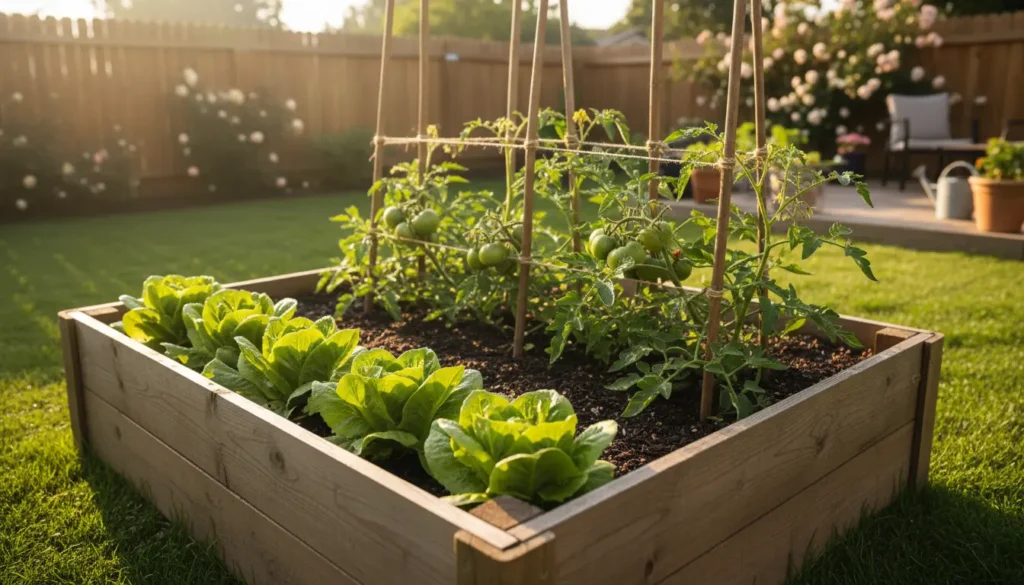
Case study: A two-person household started a 4×8 foot raised bed. They chose tomatoes, lettuce, bush beans, and basil. After preparing soil with compost and using drip irrigation, they harvested salad greens within five weeks and tomatoes by mid-summer.
They saved on groceries and reported fewer pest issues after adding marigolds and rotating beans to a different bed the next year.
Seasonal Checklist to Start a Vegetable Garden
- Spring: Test soil, add compost, start cool-season crops from seed.
- Late spring: Plant transplants for warm-season crops, mulch, and install drip irrigation.
- Summer: Monitor water, harvest regularly, and manage pests early.
- Fall: Clear spent plants, save seeds if desired, and add a thick layer of compost or cover crop.
Final Steps: Start Small and Iterate
Begin with one or two beds or a few containers to learn local conditions and timing. Keep a simple journal noting planting dates, varieties, and harvests.
As you gain experience, expand beds or try new crops. Gardening is seasonal learning; small adjustments improve yields year to year.
Ready to start? Choose a sunny spot, prepare soil with compost, and plant one easy crop this season. Track results and grow your garden progressively.