
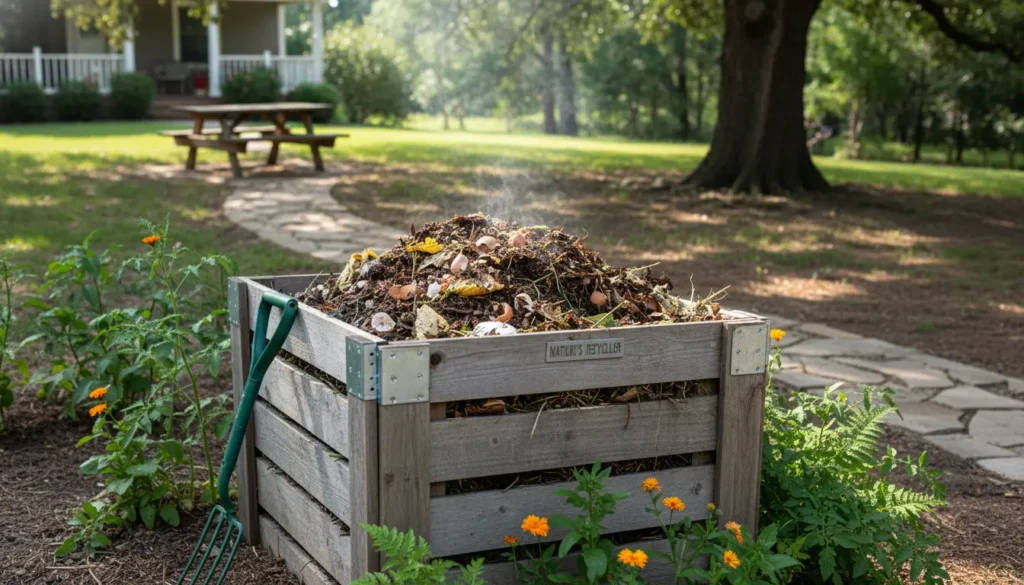
Composting turns kitchen scraps and yard waste into a valuable soil amendment. This guide explains simple steps any beginner can follow to start composting at home and maintain a healthy pile.
Why Home Composting for Beginners Works
Composting is a natural decomposition process that combines organic materials, oxygen, moisture, and microbes. Over weeks to months these components break down into dark, crumbly humus that improves soil structure and fertility.

For beginners, composting is low cost and flexible. You can compost in a backyard bin, a small tumbler, or even indoors with a worm bin.
Essential Supplies for Home Composting for Beginners
You do not need fancy equipment. Start with a few basic supplies and expand as you learn what works for your home.
- Compost bin or tumbler, or a simple pile in a corner
- Kitchen container for scraps (with a lid)
- Garden fork or aerator tool
- Water source (hose or watering can)
- Optional: compost thermometer
Step-by-step Process for Home Composting for Beginners
Follow these steps to build and manage a compost pile that decomposes evenly and without bad odors.
1. Choose a Bin and Location
Place your bin on soil or grass to allow worms and beneficial organisms to enter. Choose a level, well-drained spot with some shade to keep moisture steady.
Options include open bins, closed tumblers, or worm bins for indoor setups.
2. Add Materials in Layers
Balance ‘greens’ (nitrogen) and ‘browns’ (carbon) for effective decomposition. Greens are moist and rich in nitrogen; browns provide carbon and structure.
- Greens: vegetable scraps, fruit peels, coffee grounds, fresh grass clippings
- Browns: dry leaves, shredded paper, cardboard, straw

A good starting ratio is roughly 2 to 3 parts browns to 1 part greens by volume.
3. Maintain Air and Moisture
Turn or aerate the pile every 1–2 weeks to introduce oxygen. Aeration speeds up decomposition and prevents odors.
The pile should feel like a damp sponge. Add water if it is dry, or add more browns if it is soggy.
4. Monitor and Harvest
Compost can be ready in 2–6 months depending on materials, temperature, and how often you turn it. Finished compost looks dark, crumbly, and smells earthy.
Sift out large pieces to return to the bin for further breakdown, and use the finished compost in pots, raised beds, or as a top dressing.
Worms and microbes in compost can process up to half their weight in food scraps each day, making vermicomposting a fast option for small spaces.
Common Problems and Solutions for Home Composting for Beginners
Beginner composters often run into the same issues. These quick fixes will keep your pile healthy.
- Bad odors: add more browns and turn the pile to increase aeration.
- Slow breakdown: chop large pieces and maintain moisture and oxygen.
- Pests: avoid adding meat, dairy, or oily foods and use a closed bin if needed.
- Excess heat or drying: shade the bin and water lightly to retain moisture.
Case Study: Small Backyard Success
Maria, a homeowner with a small yard, started with a 60-gallon compost tumbler. She collected kitchen scraps in a countertop pail and added dry leaves from fall work.
By keeping a 3:1 ratio of leaves to kitchen scraps and turning the tumbler weekly, Maria produced usable compost in about four months. She mixed the finished compost into vegetable beds and reported healthier tomatoes the following season.
Tips and Best Practices for Home Composting for Beginners
Consistency matters more than perfection. Small, regular inputs and occasional turning create steady progress.
- Chop or shred larger items to speed decomposition.
- Save a jar of finished compost to use as a starter for new piles.
- Layer materials rather than adding large amounts of one type at once.
- Keep a small bin in the kitchen to reduce trips to the outdoor bin and prevent indoor mess.
Final Thoughts on Home Composting for Beginners
Home composting is a practical way to reduce waste and improve garden soil without heavy investment. Start small, observe changes, and adjust the balance of materials as you learn.
With a simple bin, a few basic tools, and weekly attention, beginners can create rich compost that benefits plants and the planet.